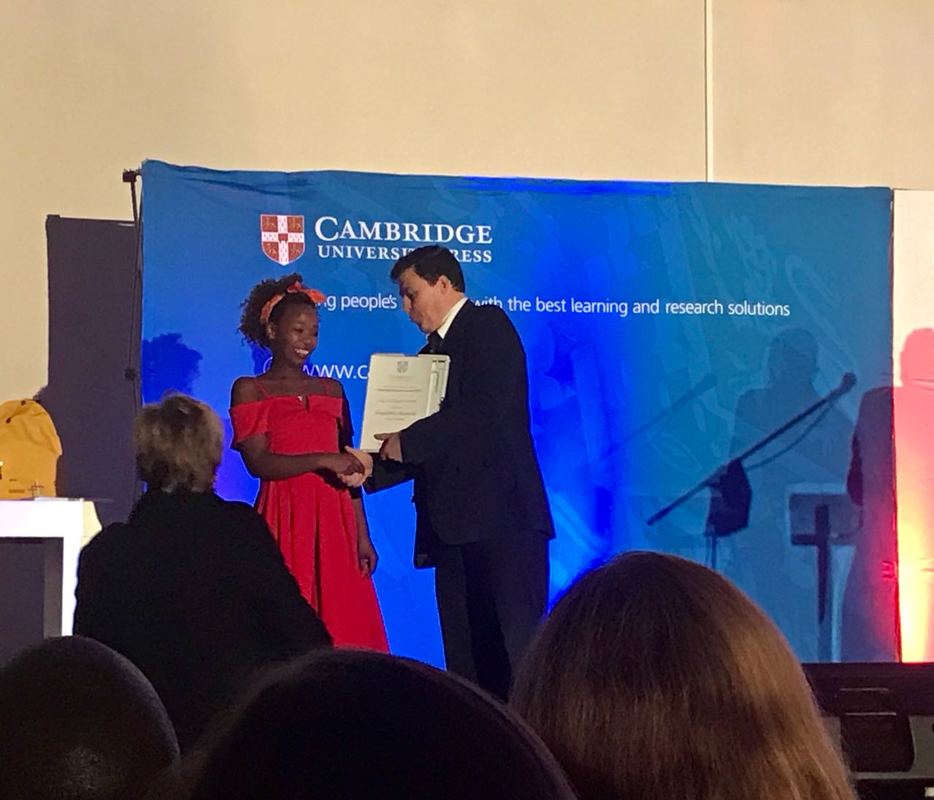
 Gugu Nxumalo is an amazing friend of ours who has asked us to share her story. She is a young, vibrant 18-year-old Zimbabwean woman living in the bustling, overcrowded inner-city of Johannesburg, South Africa. Her infectious hope stands in stark contrast to her story which is one filled with tragedy and revealing of the systemic failings and injustices in our context. Despite this she has also remarkably overcome. In telling her story, she defiantly says, “I may be vulnerable, but I am not a victim. I dream of a just world… I want to dedicate my life to hope.” Her story gives insight into the underbelly of Johannesburg’s poverty and points to the hope found in Jesus’s church demonstrating Christ’s kingdom ways. Gugu’s family fled the economic melt-down in Zimbabwe crossing the Limpopo river in 2008. They moved into an inhumane, derelict “hijacked” building. While there, at the age of just 11, she was first sexually assaulted - the first of 4 violent sexual assaults she has so far experienced. Gugu has further faced 3 evictions, xenophobic attacks and multiple encounters with police brutality. She describes her hardest moment as “watching my hero, my mother die of cancer in 2016. My mother was initially denied treatment from a government hospital because she was a foreigner, and as a result only started chemotherapy after 15 months… she died just a few weeks later.” While Gugu was staying with her aunt, during the final months of her "o" levels at school she got evicted for and Lawyers For Human Rights worked to return her to her home. She was returned after 5 weeks of living on the streets. It was while she was living on the streets that she wrote her final exams. Despite these extremely difficult circumstances, she obtained the following results:
*Please note that monies raised above Gugu's educational needs will go into the General Neighbours education fund and be used for educational expenses of other children we support.
0 Comments
 Here is a list of practical items we are in need of... For the Computer Classes and Computer per household
Learning Centre
Alternatively, please message Trish at trish@transforming.org.za or 083 499 6073
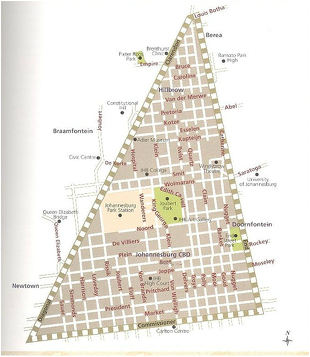 Hillbrow is a one square kilometre area that formed part of the original Johannesburg. Johannesburg’s history stretches back to a Sunday in March, 1886, when Australian, George Harrison, stumbled upon surface outcrops of gold-rich conglomerate on a farm-land near the centre of Johannesburg. Gold changed the face of Johannesburg. Before 1886, it had been a struggling Boer republic, but 10 years later, it was the richest gold mining area in the world. As news of the gold find spread throughout South Africa and the rest of the world, men made their way to Johannesburg. President Paul Kruger appointed a commission to survey a site for a township to service the new goldfields. A triangular two-and-a-half square kilometre piece of “uitvalgrond” (ground left over) from the three Boer farms – Braamfontein, Turfontein and Doornfontein was identified and duly mapped out. The booming mining town required cheap, unskilled labour and so within just a few years, many thousands of men were leaving their homes from all over the world to join the unskilled migrant workers who flocked to Johannesburg for the low wages on offer. From its early beginnings, white “Randlords” (a term used at the time to describe the entrepreneurs who controlled the diamond and gold industries in South Africa in its pioneer phase) lived in opulence while the predominantly black Mineworkers were subjected to humiliating, degrading and exploitative conditions. Many historians argue that the system of racial discrimination is rooted in the migrant labour system. The popular song by Jazz musician Hugh Masekela, entitled Stimela (the coal train) describes quite well these tumultuous times and what they must have meant for the men who flooded to Johannesburg: "There is a train that comes from Namibia and Malawi There is a train that comes from Zambia and Zimbabwe, There is a train that comes from Angola and Mozambique, From Lesotho, from Botswana, from Swaziland, From all the hinterland of Southern and Central Africa. This train carries young and old, African men Who are conscripted to come and work on contract In the golden mineral mines of Johannesburg And its surrounding metropolis, sixteen hours or more a day For almost no pay. Deep, deep, deep down in the belly of the earth When they are digging and drilling that shiny mighty evasive stone, Or when they dish that mish mesh mush food into their iron plates with the iron shank. Or when they sit in their stinking, funky, filthy, Flea-ridden barracks and hostels. They think about the loved ones they may never see again Because they might have already been forcibly removed From where they last left them Or wantonly murdered in the dead of night By roving, marauding gangs of no particular origin, We are told. They think about their lands, their herds That were taken away from them With a gun, bomb, teargas and the cannon. And when they hear that Choo-Choo train They always curse, curse the coal train, The coal train that brought them to Johannesburg" Over 125 years later and they continue to come, migrant workers flock to “eGoli” (the city of gold). For many who flock to South Africa, the city centre of Johannesburg, and in particular Hillbrow, is the starting point. Many who come are fleeing economic meltdowns, poverty and conflicts which have besieged the African continent. While gold is no longer mined close to the centre of Johannesburg, its bedfellow, the South African Rand, still lures men from across the continent. Many of the remnants of the multi-tentacled legacy of the migrant labour system still linger and have left the city and its people scarred. As I dream of Shalom for my community, I am cognisant of the haunting voices from our history, reminding me that forces larger than I have for centuries been at work dehumanising, violating, destabilising, demonising, and opposing God’s vision of Shalom.  “Do not merely listen to the word, and so deceive yourselves. Do what it says. Anyone who listens to the word but does not do what it says is like someone who looks at his face in a mirror and, after looking at himself, goes away and immediately forgets what he looks like. But whoever looks intently into the perfect law that gives freedom, and continues in it—not forgetting what they have heard, but doing it—they will be blessed in what they do. Those who consider themselves religious and yet do not keep a tight rein on their tongues deceive themselves, and their religion is worthless. Religion that God our Father accepts as pure and faultless is this: to look after orphans and widows in their distress and to keep oneself from being polluted by the world.” James 1:22-27
James is a counter-culture book in the same way that Christianity is a counter-culture religion. It calls us to have a faith which is not only declared but rather that is radically lived. The most eloquent Christianity is not that which is preached from our pulpits, proclaimed or prophesied from our platforms, but rather that which is practised by our people. Christianity which shakes up the world is courageous, it is intentional, it is sacrificial and most of all it is extremely loving. When we look at all of society around us, we find that so many are caught up in the values of greed, consumerism, materialism, individualism, and racism. These values have deeply scared our relationships, our lifestyles, and our psyche. Sadly when the world looks at the church, they often see no difference in us. Often the biggest obstacle to God has been Christians - Christians who have had so much to say with our mouths and so little to show with our lives. Gandhi was once asked if he was a Christian, to which he replied, “I like your Christ, I do not like your Christians. Your Christians are so unlike your Christ.” In more modern times, things seem to be no better - a recent study showed that the top three perceptions of Christians in the U. S. among young non-Christians are that Christians are 1) antigay, 2) judgmental, and 3) hypocritical. This is especially disturbing when we consider that Jesus taught us that they will know that we are his disciples by our love for one another (John 13:35). If we as church leaders are going to produce counter culture, upside down kingdom, Christ-like Christianity, we are going to have to do some things differently. As challenging as it sounds, as difficult as it is, we are going to have to become more like Christ. His values need be reflected through our lives in the way we treat people and care for those on the margins. We need to be a people who are markedly different, practicing what he taught. Imagine if all in our church were living out the Sermon on the Mount (Matthew 5-7), practicing it and demonstrating it. This Christianity is infectious and dangerous because it challenges everything the world trusts in. If we are honest, however, this kind of Christianity is the only hope for the world because it is a sign that a new world filled with justice, peace and righteousness is not only possible, it is already here and has been breaking through into the present for almost 2000 years as the radical followers of Christ have practiced his death and resurection. As NT Wright says, “When God saves people in this life, by working through his Spirit to bring them to faith and by leading them to follow Jesus and discipleship, prayer, holiness, hope, and love, such people are designed – it isn’t too strong a word – to be a sign and foretaste of what God wants to do for the entire cosmos. What’s more, such people are not just to be a sign and foretaste of that ultimate salvation; they ought to be part of the means by which God makes this happen in both the present and the future.” When people look at us, may they find us to be both signs and agents of hope of a kingdom breaking through into this world. May they though our lives, see, smell, taste, touch, feel and hear what His kingdom is and through that, encounter the beauty and splendour of our loving King.  "To take your position on the spiritual edge of things is to learn how to move safely in and out, back and forth, across and return. It is a prophetic position, not a rebellious or antisocial one. When you live on the edge of anything with respect and honor, you are in a very auspicious position. You are free from its central seductions, but also free to hear its core message in very new and creative ways." Richard Rohr
Throughout history, Christians have too often developed theology to support and sustain the oppression of people and to stand on the side of the powerful. I confess that I sometimes really struggle with embarrassment at Christianity because so many of us, including me, allow our twisted "theology" to put us on the wrong side of the issues of our day. Even if theologically we disagree with the dominant theological position, we sometimes are too fearful to speak out for fear of exclusion, more concerned with our belonging than with the transformation of the world. Slavery, colonialism, women's suffrage, the holocaust, apartheid... are all issues which have been upheld and sustained (and later dismantled) by Christian theology. I fear currently there are several issues in which the church stands on the side of the oppressor and even participates in oppression. The Israel/ Palestine conflict is in my view one of these issues. We have allowed one eschatological view of Israel to excuse their brutal, violent and illegal occupation and oppression of the Palestinian people. Yet there is hope! As I look at Jesus, I find hope. Jesus is always on the side of the oppressed and marginalized and even in the face of tradition and law, he sides with them. As I look at church history, I too find hope there. Within the church there seem to be voices on the inside edge as Richard Rohr says (above). These prophetic voices begin to dream of a different world and then begin to imagine what it could be like. It captivates their thoughts and soon their lives and they begin to pull the vision towards them by demonstrating that this new world is not only preferable, but also possible. I want to be a person living on the inside edge of the church pulling the new world I dream of towards me.  It is not every day that you have a person come and do their doctoral research scrutinizing your work and in particular your attitudes, beliefs and practices about race and racial transformation. Rachel Schneider did just that in chapter 4 of her dissertation entitles "Embracing the Struggle: Urban Relocation, Solidarity, and Truth-Telling". The chapter looks in particular at our own efforts to tackle racism in South Africa and provides a glimpse of us on that journey in 2014. We have learned a lot since then and are still learning. This piece of work is critical at times and encouraging at others.
 I have a confession to make, most of my life I thought “exclusive” was a desirable thing. It has been marketed to me as something which is valuable and to be sought after. It has appealed to me. Phrases like “you deserve it”, “you’re worth it”, and “you have worked hard for it” are often associated with the concept to create the illusion that I am more worthy than others of special treatment.
Is it really OK for me to have special treatment? Why do my children “deserve” a better education than most others? Why do I “deserve” a wider seat when I fly? Why do I “deserve” a private banker? Have I really worked harder than the woman who left home this morning at 4:30 only to return when it is dark, working as a domestic worker? Doesn’t she actually deserve it more? The word “exclusive” deceptively appeals to something deep within. Ordinary people get treated so badly on a daily basis that when they get to be treated with dignity and respect, which is right, they often don’t question “why only me”? Is this pride? Is this selfishness? It is shocking that when we are treated in this way we tend to stop asking why everyone should not be treated right anymore. It seems that the easiest way to get someone to stop fighting for justice for all is to treat them as special. Privilege seems to neuter us from advocacy for justice. While there are exceptions, white people generally don’t fight for racial equality; rich people generally don’t fight for economic justice; and the politically included generally don’t fight for the marginalised. Tragically it is not only the included who fail to fight for justice, often the excluded, rather than seeking justice, seek fake inclusion. One only has to look at the abundance of fake brands littering our streets to see that many believe their fake Louis Vuitton handbag, fake Rolex watch or fake Mont Blanc pen will heal their wounded psyche and sense of alienation. When we are told we deserve exclusive excellence, it often leaves us with the illusion that others have done something wrong. They are bad, not hard working enough, have bad attitudes. This in turn makes us feel superior in some ways. How insane! I have to admit that the more I live among those who are excluded, the more I feel nauseated by the intentional practice of exclusion. From now on I am #AntiExclusivity!
I never get tired of this! It is really good!
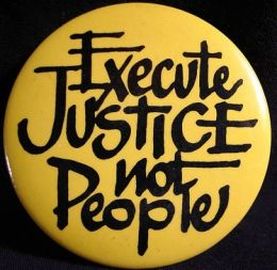 I have a good friend who was executed despite his being innocent. His death always reminds me how broken the justice system is. He was such a loving man and I suppose the real reason he was executed was because his life and the message of his life spoke about a different kind of world. He believed, truly believed, that all people deserved mercy. He was a religious leader (actually a Rabbi) and I remember that his country had the death penalty for adultery. I remember one time him arriving on the scene as some really judgemental men were about to put a woman who was caught in the physical act of committing adultery to death. You really could not argue with the evidence. He said something really profound which still resonates with me. His argument was basically that the woman could only be executed by people who had never done anything wrong themselves basically pointing to the idea that only a perfect being (God) should have power over life and death.
My friend, as a rabbi, often spoke about those Old Testament "eye for an eye" texts and repeatedly taught instead about loving our enemies. It is ironic that despite one of the authorities at my friend's trial saying out loud that he finds nothing wrong with him, my friend was still executed. I remember when my friend was executed he was still practising what he taught. He prayed for those who had executed him asking God to forgive them. I draw a lot of inspiration from my friend and also want to follow in what he taught while he was around. This is one of the main reasons why I don't advocate for the death penalty. There are many other reasons as well (like there being no evidence that it works as a deterrent,or the fact that race and poverty play important roles in deciding who gets chosen to be executed). To argue that it is cheaper to execute people is not only morally questionable, it is factually incorrect (for fairness many legal safeguards are needed and this is expensive). It is interesting and noteworthy that in the first 300 years of Christianity, the church opposed state-sanctioned killings. As early church father, St. John Chrysostom said "Our warfare is to make the dead to live, not to make the living dead”. It is also noteworthy that according to a recent Barna poll only five percent of Americans believe Jesus would support the government’s ability to execute the worst criminals. This includes 2 percent of Catholics, 8 percent of Protestants, and 10 percent of all practising Christians. Christian leaders, including the U.S. Conference of Catholic Bishops, have also been some of the most outspoken opponents of execution. Despite believing Jesus would not support the death penalty, many still support it themselves. I suppose this is one of the reasons why in another Barna study when non-Christians were asked to describe Christians the number one descriptor was the word Hypocrite. We really can change this by practising and advocating for what my friend taught. A world where justice and mercy mingle together through love. |
Archives
October 2020
quick links
All
|

 RSS Feed